These systems allow law firms to monitor funds for each client or case individually. This ensures every transaction is recorded correctly and easily traceable. Accounting systems help law firms keep track of incoming and outgoing funds, ensuring there is always enough cash to cover expenses and obligations. We review your firm structure, Bookkeeping for Law Firms accounting tools, trust requirements, and existing workflows.
Litigation Practices
Experienced professionals manage complex legal accounting rules. This keeps firms protected from financial and compliance risks. Effective monitoring helps law firms remain financially resilient. Track retainers, billable hours, invoices, and payments for each client. Timely billing improves cash flow and client communication. Meru Accounting provides full payroll services, ensuring lawyers, paralegals, and support staff are paid accurately and on time.
Improving Cash Flow and Revenue Collection
Financial accounting for lawyers keeps income, costs, and tax items ready all year. Let Firm Balance deliver expert-level trust accounting for lawyers that aligns with your state bar’s IOLTA requirements. Whether you’re starting fresh or cleaning up years of records, we’re ready to help.
Using these tools, we help reduce errors and improve control over client funds.
For a CPA to work effectively, they will need you to provide accurate, up-to-date financial statements.
Expense tracking is aligned with firm policies and approval processes.
Reports are shared in a clear and easy to understand format.
Navigate complex financial decisions with expert guidance.
A knowledgeable trust account bookkeeper helps ensure client funds are handled accurately and in line with legal standards.
Scalable Systems
AZL specialises in these complex transitions, ensuring a smooth process that preserves the firm’s financial integrity and external visibility from day one. Beyond reconciliation, evaluate whether your current trust accounting procedures meet your state’s requirements. Many firms discover gaps only when facing an audit, which is the worst possible time to learn your procedures are inadequate.
Trusted by Top Legal Teams
Choosing the right law firm trust accounting service is more than keeping records. It requires accuracy, compliance, and reliable long-term support. At Meru Accounting, our professionals work as an extension of your firm. We make sure client funds are handled ethically and in line with bar regulations. This lets your team focus on clients while we manage trust accounts carefully. Trust in professional trust accounting for law firms comes from accuracy, transparency, and consistent results.
Bookkeeping can be adjusting entries manageable for beginners, especially with the help of modern accounting bookkeeping software and basic training. Many people start with simple data entry tasks and build up to more advanced responsibilities like generating reports or managing payroll. With consistent practice and the right tools, bookkeeping skills can grow quickly. Bookkeeping involves the recording, on a regular basis, of a company’s financial transactions. With proper bookkeeping, companies are able to track all information on their books to make key operating, investing, and financing decisions.
What is the difference between bookkeeping and accounting?
Understand the meaning of bookkeeping, what it entails, and how it supports accurate financial reporting, tax preparation, and business decision making. Find out what bookkeepers do, and get an intro to double-entry bookkeeping. You should consult your own professional advisors for advice directly relating to your business or before taking action in relation to any of the content provided. Most often, their reports go to business owners and managers to help them make decisions. Some bookkeepers, however, are actually involved in strategy development. Prior to becoming an editor and content strategist, she covered small business and taxes at NerdWallet.
Build a career with Plante Moran
This article will explain what bookkeeping is, explore various bookkeeping methods, and explain why it’s essential for your business’s health and sustainability. In order to sit for the CPA exam you’ll need to have an accredited bachelor’s degree, and in many states also a master’s degree in accounting. An online bachelor’s degree program will be a crucial first step in preparing for CPA certification. When researching an online accounting degree, you’ll need to ensure that your online degree is from an accredited institution.
Recommended experience
Bookkeepers are responsible for providing accurate, up-to-date financial information about bookkeeping definition a business. You might receive Form 1099-A if your mortgage lender canceled some or all of your mortgage or you were involved in a short sale of your home. Canceled debt is income in the eyes of the IRS — and it’s generally taxable.
No assurance is given that the information is comprehensive in its coverage or that it is suitable in dealing with a customer’s particular situation.
The single-entry method will suit small private companies and sole proprietorships that do not buy or sell on credit, own little to no physical assets, and hold small amounts of inventory.
This article will explain what bookkeeping is, explore various bookkeeping methods, and explain why it’s essential for your business’s health and sustainability.
Rather, they measure all of the claims that investors have against your business.
However, as a company grows, professional help may be beneficial for tasks like tax preparation and financial reporting, ensuring compliance and efficiency.
A certificate may not be worth it if you already have a bachelor’s degree in accounting or a related field, or if you already have professional bookkeeping experience. Learn how to work through the phases of the accounting cycle to produce key financial statements. The five stages of bookkeeping are crucial for maintaining accurate financial records. The three golden rules of bookkeeping are crucial for maintaining accurate financial records.
Being cloud-based, it’s also very convenient for our team to access our finances from anywhere, great for supporting remote or hybrid work environments.
While you can do it yourself if you know numbers and spreadsheets, the tasks can be time-consuming and cut into your other business responsibilities.
The WGU undergraduate accounting program was founded in 2002 and has over 7,400 graduates.
Bookkeeping is a process of recording and organizing all the business transactions that have occurred in the course of the business.
If you’re a CPA or tax professional, learn more about how you can empower your clients to bring complete bookkeeping for tax filing with Bench.
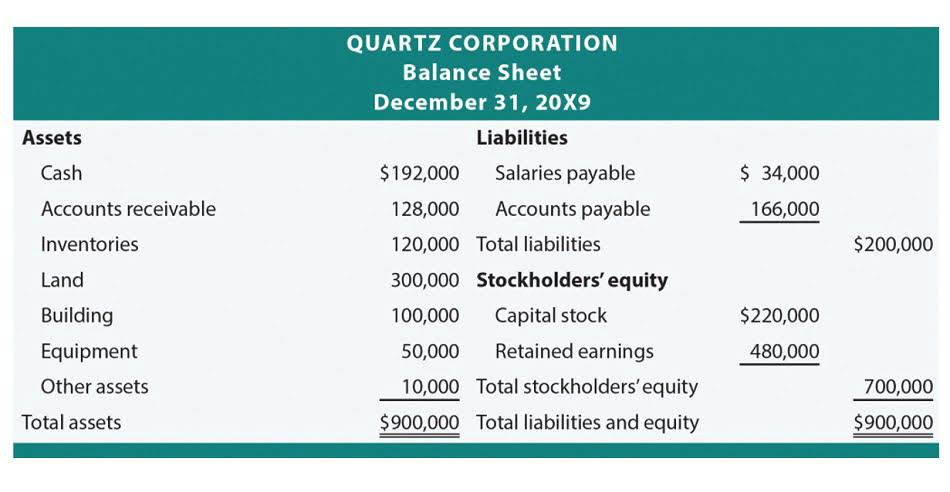
The three major financial reports that every business must know and understand are the cash flow statement, balance sheet, and income statement.
Many WGU graduates may see an increase in income post-graduation
Competency-based education means you can move as quickly through your degree as you can master the material.
Along with salary, there are other costs to consider, like employee health benefits, training, and any necessary software or tools.
When you keep transaction records updated, you can generate accurate financial reports that help measure business performance.
This course also presents bank reconciliation methods, balance sheets, and business ethics.
Project Management prepares you to manage projects from start to finish within any organization structure.
Every industry keeps accounting records https://putrimalu.com/cpa-boston-ma-top-boston-bookkeeping-accountant/ to manage expenses, income, and tax payments. Organizations may offer full-time, part-time, and contract roles in this field. Accountants use the records a bookkeeper provides and their own expertise to help build budgets, assess finances, and make business decisions.
#7 Financial Statements
The actual cash does not have to enter or exit for the transaction to be recorded. In cash-based, you recognize revenue when you receive cash into your business. In other words, any time cash enters or exits your accounts, they are recognized in the books.
Massachusetts also has a surtax that applies to all income, including capital gains income, in excess of $1,000,000 per year. Long-term capital gains tax applies to assets you’ve held for more than one year, offering lower tax rates and potentially reducing your tax burden. First, the prior year short-term unused losses Foreign Currency Translation are offset against short-term capital gain, resulting in net short-term capital gain of $3,000.
Are capital gains taxed at the state level in Massachusetts?
If you reinvest the proceeds from your real estate sale into another property within 45 days, you can potentially defer all capital gains taxes. Note that if you invest in mutual funds and investments are sold within the fund that cause you to incur short-term capital gains via distribution, you won’t be able to offset these with losses and you’ll have to pay any applicable taxes. You can still tax-loss harvest to offset any long-term capital gains distributions massachusetts income tax rate that funds may incur and pass on to you, though. Tax-loss harvesting allows you to sell investments that are below your cost basis/purchase price and use those capital losses to offset realized capital gains from selling appreciated investments.
No Real ID yet? Flying through TSA security could now cost you $45 starting Feb. 1
The Democratic Legislative Campaign Committee, the main fundraising arm for statehouse Democrats, set a $60 million budget to support legislative races this year. Forward Majority, a group aligned with Democrats, is planning to spend $45 million this cycle. And The States Project, another progressive group, announced a $70 million goal earlier this year. Nearly every legislature is controlled by one party or the other, making it easier to pass laws over the objections of political opponents. There are only two capitols where legislative chambers are split between parties — Pennsylvania, which has tight margins in both the House and Senate, and Alaska, which is controlled by a multiparty coalition.
Federal capital gains
This article is for informational purposes and is not tax or legal advice. Asset management is another crucial element of estate planning with a 1031 exchange. Keeping detailed records of properties acquired through balance sheet these exchanges and understanding the tax implications for beneficiaries can greatly ease the transfer process.
Harvesting losses and managing your 2026 income
On the East Coast, you can head to the polls to register and vote today in Connecticut, Maine, Maryland, New Hampshire, Vermont, Virginia and Washington, D.C.
The race for president remained too early to call in Michigan and Wisconsin, as well as in Arizona and Nevada.
Contributions are made with after tax dollars, but qualified withdrawals in retirement are not taxed, which effectively makes the long term capital gains rate inside the account 0% regardless of your future income.
With her victory, Alsobrooks becomes the first Black senator to represent the state of Maryland.
Another possible factor, Chamberlain says, is that many women do not believe Trump would enact the radical changes on which he’s campaigned.
However, once the property is sold and if the owner passes away, the step-up in basis would be applicable, allowing heirs to revalue the property at the date of death.
“NOBODY knows how the originally scanned ballots were voted,” she said. A third fake video claims the bureau received “9,000 complaints about malfunctioning voting machines” that were allegedly submitting votes for one candidate. The FBI says fake videos and press releases are impersonating the bureau to push false claims about the election. On Tuesday evening, the FBI called out three more, which it says are the latest in a series “designed to mislead the American public.” The policy, opposed by Republican Gov. Ron DeSantis and supported by former President Trump, would have authorized the state’s medical marijuana growers and retailers to sell to consumers.
But four years earlier, in NPR’s final poll before the election, Biden led Trump by 36 points among likely voters under 30.
When an individual passes away, the value of their assets, including real estate, can be recalibrated.
“I’ve always felt that once we were on the ballot we would win because our position is really popular,” said Chris Love, a spokesperson for the amendment effort.
The holding period of the investment you sold is also added to the holding period of the new investment.
With high rates and ever-changing rules, you need someone on your side who understands how Massachusetts taxes affect your financial plan.
My daughter, 67, is disabled and I would like whatever assets I have on my death to go to her to be used for her comfort, foo…
He also said the 4 million votes cast before Election Day should be reported by 8 p.m.
However, capital gains tax could apply to shares you own in a mutual fund or exchange-traded fund (ETF) if the fund has sold securities for a profit, even if you didn’t sell any shares.
The Labour Party denies any wrongdoing and has said any members who traveled to the U.S. did so on their own time.
Capital gains are taxed as ordinary income in Massachusetts, and for high-income earners who are subject to the top income tax rate, the tax burden on capital gains can be substantial.
It’s about understanding the tax implications of your financial decisions so you can minimize your taxes and, ultimately, keep more of your hard-earned money. This might involve making investments that offer tax benefits, choosing the right type of retirement account, taking advantage of generally available deductions and credits, or creating a tax-advantaged trust or other vehicle. The distinction between federal vs. state capital gains rules is major—each has its own rates and reporting requirements.
Differences Between MA and Federal Tax Law for Personal Income
It is very natural to as how much is capital gains tax in Massachusetts. Within this scope, it is important to break down the federal vs. state capital gains components—since both may apply. If you sell your primary residence at a loss, unfortunately, that loss cannot be deducted from your taxes.
Outsourced accounting helps compare actual results with budgeted figures. An accountant or tax advisor can help you navigate gray areas and make sure your filings hold up under scrutiny. This system can keep everything organized and prepare you for tax season. Form 1099-NEC is used to report payments of $600 or more to independent contractors like freelance paralegals, expert witnesses, or investigators who are not your employees. In addition to keeping clear records, your State Bar will also ask you to run regular reconciliation, and in particular, regular The Importance of Expert Bookkeeping for Law Firms three-way reconciliation.
The experienced bookkeepers at BooksTime understand the latest legal accounting regulations.
When each office prepares reports separately, consolidation takes time.
Use secure client portals, mobile time tracking, and easy reporting to work smarter and grow faster.
An outsourced accounting provider that services law firms will ensure they employ accountants who have the necessary skill set to service their industry.
Having that safety net and multiple sets of eyes to check on all those workflows helps me not miss anything, and helps me feel comfortable that everything is done correctly.
Specialized bookkeeping for attorneys gives law firms a clear picture of their financial health.
Audit Support
At Eide Bailly, we place a premium on long-term relationships rather than providing one-time services. Eide Bailly distinguishes itself by offering comprehensive professional accounting services for all aspects of https://ranawaxman.com/the-importance-of-expert-bookkeeping-for-law-firms/ your business from start to finish. Furthermore, Eide Bailly is a registered Idaho Board of Accountancy. Price seems too good to be true Quality law firm bookkeeping costs $500-1,500/month. They explain three-way reconciliation without prompting Shows they understand the core requirement of law firm bookkeeping.
Trust Account Reconciliation: The Complete Guide for Law Firms
Aries is a skilled and versatile member management who excels in bookkeeping, payroll, purchasing and overall management. He has several years of experience in our organization and a strong knowledge of all key areas of business. Aries is pursuing an accounting degree, inspired by his father’s legacy and his desire to make a difference in the accounting field.
Tax Planning and Compliance
With a focus on agriculture, healthcare, and construction operations, we understand the day-to-day financial and management challenges you face. We use our experience and industry knowledge to solve problems and help you build a stronger organization. If you’re searching for a new job in the accounting line then you can join us as we’re looking for talented, motivated people to join our team. Time tracking If your practice management system doesn’t handle this well, standalone time tracking tools help. Owner compensation tracking Properly categorizing draws, distributions, and salary. Keeps personal and business finances separate and simplifies tax preparation.
What is law firm accounting?
Her experience is broad, having spent eight years in hospitality management for Red Lion Hotels and five years in medical billing; including working for Blue Cross of Idaho.
Bloomberg Law provides trusted coverage of current events enhanced with legal analysis.
With well-established accounting, firms are better able to manage their budgets, allocate finances, and control expenses.
Our feature-rich tools and smart integrations help you automate tasks, reduce stress, and focus on meaningful work.
Legal-specific experience They should work primarily or exclusively with law firms.
Our meticulous approach to trust accounting eliminates errors, prevents commingling, and ensures strict adherence to fiduciary and regulatory requirements. Entrust your legal practice needs to experts who understand legal bookkeeping. Trust our specialized team to ensure your financial affairs are handled with precision and care, allowing you to focus on your legal practice.
From cloud-based accounting software to online payroll services, the firm leverages the latest technology to improve efficiency and effectiveness.
We’ll recommend a tailored accounting and advisory solution designed to support your firm’s success.
The firm’s clients come from a wide range of industries, including agriculture, construction, healthcare, hospitality, and non-profit organizations.
Browse the articles below to stay up-to-date on new tax laws, how to avoid the latest scams, and more.
Understanding legal accounting terms such as chart of accounts and double-entry system is crucial. Law firms often choose to hire professional accountants or bookkeepers who understand things like client trust accounts so that everything with money stays safe and correct. Law firm accounting is more than just bookkeeping — it’s a critical component of compliance, client trust, and firm growth. Attorneys who neglect proper financial management risk penalties, reputational damage, and lost profitability.
Essential Bookkeeping Practices for Busy Attorneys
The most common mistakes are putting funds in the wrong account, accidentally or intentionally withdrawing funds, fail to report monthly, and so on. Poor management of trust accounts can lead to penalties, suspension, or even losing Bookkeeping for Law Firms the right to practice law. From managing client cases to navigating complex legal matters, your attorneys have enough to juggle.
Get insights on running a successful law firm sent right to your inbox.
This begins with setting up the right accounts and processes to track every dollar that comes in and goes out of your firm.
Selecting the right legal accounting software can make all the difference in achieving optimal efficiency.
Regular training and oversight help ensure compliance with these important ethical and financial obligations.
As your firm expands, scaling accounting for attorneys becomes more complex.
Interest earned on IOLTA accounts is sent directly to local Bar Associations to support charitable legal services. This integration eliminates duplicate financial capturing between conveyancing and account management systems and dramatically increases the efficiency and accuracy of client and matter accounts. Our innovative approach and virtual concept enables us to be of service anywhere in the country, to the Practitioner who does not require an onsite Bookkeeper.Has your Bookkeeping fallen behind? Lawyers are fiduciaries, meaning they handle funds that belong to their clients.
Immigration Add-On That Gives You Time Back
Keeping track of AR and AP helps the firm have enough cash, pay bills on time, and avoid extra costs or stress. You can add as many accounts to your chart of accounts as you need to prepare accurate and informative financial statements, but don’t let your chart of accounts get too unwieldy. Trust accounts hold client funds, requiring strict adherence to rules to prevent misappropriation. Consider factors such as the provider’s experience with legal bookkeeping, security measures, compliance certifications, client references, pricing structure, and communication protocols.
You may want to consider this method if you’re planning to grow a large firm. Businesses must use accrual accounting if it is publicly traded or receiving federal funding. Some investors also prefer accrual accounting since it more accurately records income and expenses when they were earned. Cash accounting, or cash basis accounting, is when a firm reports transactions only when cash is received or paid out. This is the simpler method of the two and is commonly used by small businesses.
Law firms face strict regulatory oversight, and any misstep in handling client funds can result in serious consequences. With evolving state rules and technology, mastering these essentials is non-negotiable for every legal practice. Bookkeepers maintain and record all financial transactions in the original books of entry and balance the financial accounts for your firms. They summarize and organize all the company’s financial transactions chronologically in a systematic manner. In law firms, legal bookkeeping takes place first and relates to the administrative side of tracking cash. The good news is, we’ve made this guide to help you know the essentials of bookkeeping and accounting for law firms.
But it’s also a lot of https://thebossmagazine.com/post/how-bookkeeping-for-law-firms-strengthens-their-finances/ work, and as your practice grows, so does the complexity of managing your books. The first step in improving your bookkeeping practices is to lay a strong foundation. This begins with setting up the right accounts and processes to track every dollar that comes in and goes out of your firm. You can also integrate LawPay with generic accounting tools to easily track clients, invoices, and more. For example, if you use LawPay to collect payments and invoice clients, you can easily sync all your transactions into QuickBooks for easy reporting and reconciliation.
An expense tracking tool can help automate this process so you never miss a deductible expense. More simply put, this translates to processes such as the 3-way reconciliation being completed accurately. Additionally, all the reporting, including the ledgers, is complete with no missing transaction information, and the running balances are correct and verifiable.
LawPay helps prevent commingling by keeping earned and unearned funds separate, preventing third parties from debiting your trust account, and only debiting your operating account for processing fees. Using LawPay as your legal payment processor makes it easy to securely offer multiple payment options while maintaining trust account compliance. Accrual accounting records revenues and expenses when earned and incurred, regardless of when the money is received or paid. For example, when you send an invoice to a client, you’ll mark it as revenue, even though you might not get paid for 30 days. MyCase Accounting is a comprehensive legal accounting solution that houses case and financial data in one IOLTA-compliant platform.
Welcome to the Photographic Record of life aboard the USCG Cutter Duane as a World War II Pre-invasion convoy escort, as the Navy Command Ship during the invasion of Southern France, and visits to cities around the Mediterranean.